Contributors
Links
- SOGWAP.NET home page
- Shari's Isaiah62 web site
- Michael's Weblog
- Miller Family web site
- Get Well Naturally
Archives
Dedicated to God and His Word.
Shari's Isaiah 62 Web Site | Main SOGWAP - Home Page | Our Efax 707-276-3970
Sunday, March 21, 2004
Latrun
The highway from Jerusalem to Tel Aviv begins to descend steeply until it reaches the area known as Bab El-Wad (the gate of the valley). This area was the scene of fierce battles during the war of 1948. To the west is the Latrun corridor, which during the war was under Arab control. At the outbreak of the war of 1948, the police fort and military positions were taken over by the Jordanian Arab Legion, thus blocking the road from the coast to Jerusalem, until an alternative route " the Burma road " was opened.
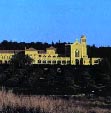
On the hillside opposite the famous Latrun police station is the Latrun Monastery. Established in 1861 as a rest station and inn for Christian pilgrims travelling through the rough road to Jerusalem, it was sold to French Trappist monks when the road was paved and it was no longer useful as an inn. The French monks built the present monastery in 1926. Set within beautifully tended gardens, olive groves, and vineyards, the monastery is famous for its wine and honey. From the monastery there is a beautiful panoramic view of the area, which expounds the strategic importance of the place.
On the summit of the hill above the monastery is a twelfth century Crusader fortress built by Flemish knights to guard the road from Jaffa to Jerusalem. The name Latrun is said to come from the name of the fortress " Toron des Chevaliers (Tower of the Knights). The remains of the castle's arches, huge columns, underground passages and outer walls can still be seen.

Remains of a 12th century Crusader fortress on the hilltop at Latrun
Latrun, the site of many famous military battles, is located on a hilltop about half-way along the 40 mile road between Tel Aviv and Jerusalem. This is believed to be the place where Joshua commanded the sun to stand still while he fought the Caananites. The Maccabees, Romans, Crusaders, Arabs and British marched through here on the way to Jerusalem. In Israel's War for Independence in 1948, some of the fiercest fighting of the war took place at Latrun.
At the foot of the hill are the remains of the Emmaus (Nicopolis) Church, first built in the 5th century, over the site believed to be the place where Jesus appeared to two of his disciples after his resurrection (Mark 16:12-13; Luke 24:13-31). The remains of a 12th century Crusader fortress, Le Toron des Chevaliers lie on top of the hill. Saladin wrecked the fortress on his march to stop Richard the Lion-Heart from advancing into Jerusalem. Since the Middle Ages, this place has been known as "Domus Boni Latronis" (Latin for "resting place of the good thief") the traditional burial place of the "good thief" crucified with Jesus. Today three Christian communities have houses of prayer here. The Latrun Monastery, built on the hillside, was founded in 1890 by a group of Trappist monks from France. The Jesus-Bruderschaft, an ecumenical Christian community from Germany, and the French Community of the Beatitudes, run retreat centers here as well.
The highway from Jerusalem to Tel Aviv begins to descend steeply until it reaches the area known as Bab El-Wad (the gate of the valley). This area was the scene of fierce battles during the war of 1948. To the west is the Latrun corridor, which during the war was under Arab control. At the outbreak of the war of 1948, the police fort and military positions were taken over by the Jordanian Arab Legion, thus blocking the road from the coast to Jerusalem, until an alternative route " the Burma road " was opened.
On the hillside opposite the famous Latrun police station is the Latrun Monastery. Established in 1861 as a rest station and inn for Christian pilgrims travelling through the rough road to Jerusalem, it was sold to French Trappist monks when the road was paved and it was no longer useful as an inn. The French monks built the present monastery in 1926. Set within beautifully tended gardens, olive groves, and vineyards, the monastery is famous for its wine and honey. From the monastery there is a beautiful panoramic view of the area, which expounds the strategic importance of the place.
On the summit of the hill above the monastery is a twelfth century Crusader fortress built by Flemish knights to guard the road from Jaffa to Jerusalem. The name Latrun is said to come from the name of the fortress " Toron des Chevaliers (Tower of the Knights). The remains of the castle's arches, huge columns, underground passages and outer walls can still be seen.
Remains of a 12th century Crusader fortress on the hilltop at Latrun
Latrun, the site of many famous military battles, is located on a hilltop about half-way along the 40 mile road between Tel Aviv and Jerusalem. This is believed to be the place where Joshua commanded the sun to stand still while he fought the Caananites. The Maccabees, Romans, Crusaders, Arabs and British marched through here on the way to Jerusalem. In Israel's War for Independence in 1948, some of the fiercest fighting of the war took place at Latrun.
At the foot of the hill are the remains of the Emmaus (Nicopolis) Church, first built in the 5th century, over the site believed to be the place where Jesus appeared to two of his disciples after his resurrection (Mark 16:12-13; Luke 24:13-31). The remains of a 12th century Crusader fortress, Le Toron des Chevaliers lie on top of the hill. Saladin wrecked the fortress on his march to stop Richard the Lion-Heart from advancing into Jerusalem. Since the Middle Ages, this place has been known as "Domus Boni Latronis" (Latin for "resting place of the good thief") the traditional burial place of the "good thief" crucified with Jesus. Today three Christian communities have houses of prayer here. The Latrun Monastery, built on the hillside, was founded in 1890 by a group of Trappist monks from France. The Jesus-Bruderschaft, an ecumenical Christian community from Germany, and the French Community of the Beatitudes, run retreat centers here as well.
